Rio de Janeiro
How Rio de Janeiro is laid out, when to go and how to get around, so you can start choosing an area: South Zone beaches, the centre and the hills.

If you book through our links we earn a commission, at no extra cost to you.
Before you book: compare the areas in Rio de Janeiro
- Region
- Southeast
- Travel style
- Beach, Culture, and Nightlife
Rio de Janeiro is spread between the sea and steep hills, and that geography shapes a trip: the area you stay in decides how much time you spend on the beach and how much in traffic. So before comparing hotels, it helps to understand how the city fits together.
How the city is laid out
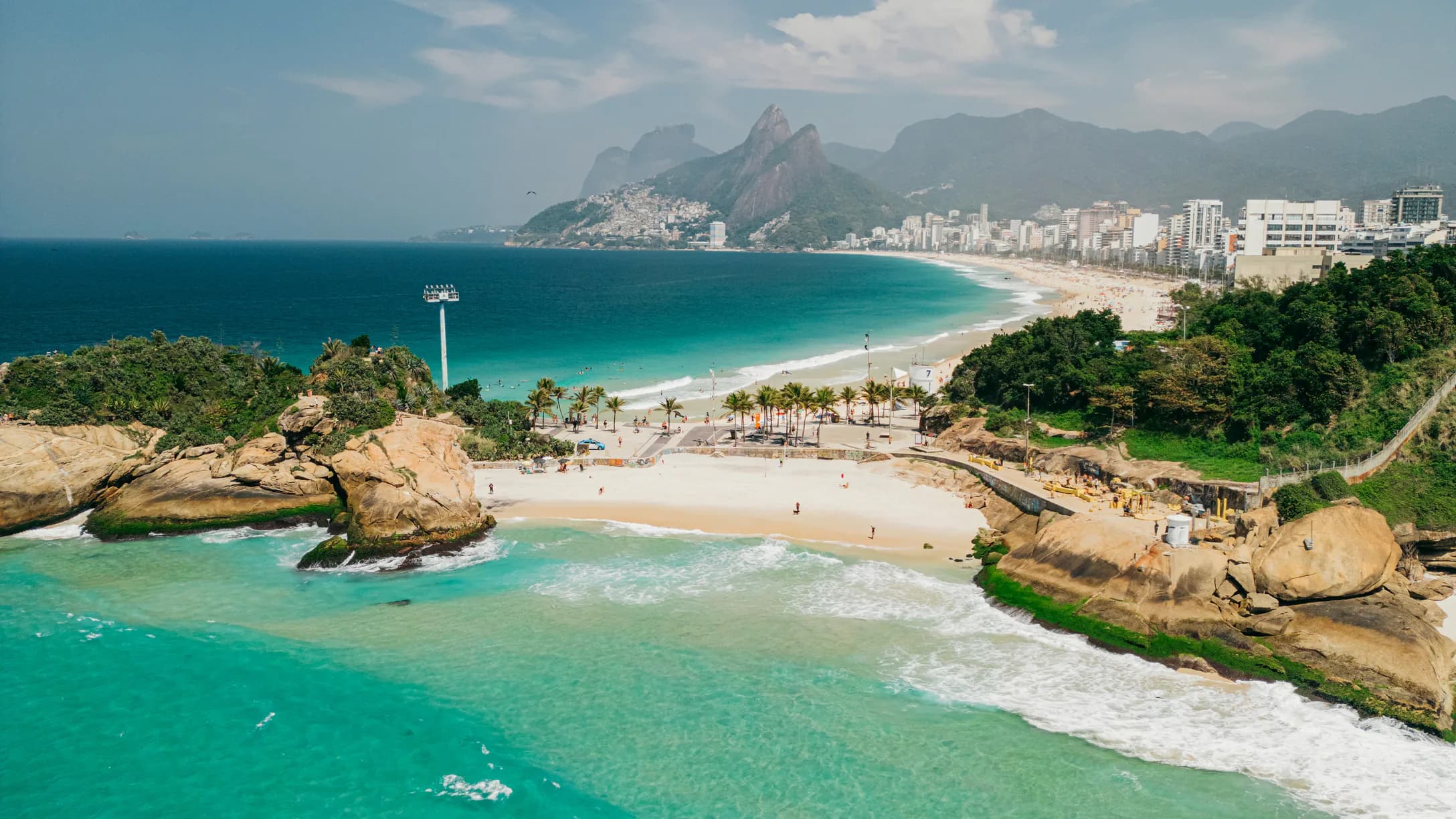
- South Zone (Zona Sul). Copacabana, Ipanema, Leblon, Botafogo and Flamengo. It has the best-known beaches, most of the hotels and the metro. This is where most visitors stay.
- Centre and Lapa. Historic buildings, museums and Lapa's nightlife. Busy with office workers on weekdays; many streets are empty at night and at weekends.
- Santa Teresa. A residential neighbourhood on a hill between the centre and the South Zone, with old houses and steep streets.
- West Zone. Barra da Tijuca and Recreio: long beaches, wide avenues and shopping malls. A long way from the classic sights.
- North Zone. Home to the Maracanã stadium and the international airport. Not an area for visitors to stay in.
When to go
Summer runs from December to March. It is beach season, with strong heat, short afternoon downpours and a full city. Prices rise and peak at New Year (the Réveillon on Copacabana beach) and at Carnival, which falls in February or March depending on the year. For both, hotels usually set minimum stays of several nights and sell out months ahead.
From May to October the days are mild, it rains less and rates drop. The sea is cooler, but there are still plenty of beach days.
Getting there and around
- Airports. International flights land at Galeão (GIG) in the North Zone, about 20 km from the South Zone; the journey time depends heavily on traffic. Santos Dumont (SDU), next to the centre, handles domestic flights.
- Metro. It links the centre with Botafogo, Copacabana, Ipanema and Leblon and continues to Barra da Tijuca. It is the simplest way to move between those areas during the day.
- Taxis and ride apps. The practical choice at night and for places without a metro station, such as Santa Teresa, Christ the Redeemer and Sugarloaf Mountain.
Combining Rio with other places
Rio works well as the first or last stop of a longer trip. Domestic flights connect it with the rest of the country, and the beach towns along the coast of Rio de Janeiro state can be reached by road in a few hours.
Practical notes
- Money. The currency is the real (BRL). Cards are accepted almost everywhere, including beach kiosks.
- Power. Rio mostly uses 127 V, with three-round-pin type N sockets. Two-round-pin plugs fit most of them.
- Tipping. Restaurants usually add a 10% service charge to the bill. It is optional, though most people pay it.
- Language. Portuguese. English is spoken in hotels and tourist areas, less so elsewhere.
Accommodation map
The map loads from Stay22, an external service.
Rio de Janeiro guides
Frequently asked questions
- When is the best time to visit Rio de Janeiro?
- May to October is drier, cooler and cheaper. December to March is beach season: hot, with afternoon downpours and higher rates, peaking at New Year and Carnival.
- How many days do I need?
- Three or four days cover Christ the Redeemer, Sugarloaf Mountain, the South Zone beaches and a walk around the centre or Santa Teresa. A week leaves room for slow beach days or a side trip along the coast.
- Is Rio safe for visitors?
- Most visits are trouble-free, but petty theft is common in busy areas. Stay in the South Zone, carry little to the beach, keep your phone out of sight on the street and use taxis or ride apps after dark.
- Do I need a car?
- No. Traffic is heavy and parking is scarce. The metro links the centre with the South Zone and Barra da Tijuca, and taxis and ride apps cover the rest.
Nearby destinations
- BúziosA peninsula with more than twenty beaches a few hours from Rio: how Búzios is laid out, so you can start choosing where to stay.In progress
- FlorianópolisHow Florianópolis is split between the calm north, the surf beaches of the east and the quieter south, so you can start choosing an area.In progress
- Foz do IguaçuWhat Foz do Iguaçu offers besides the falls, and how to choose between staying in the centre or on the road to the national park.In progress